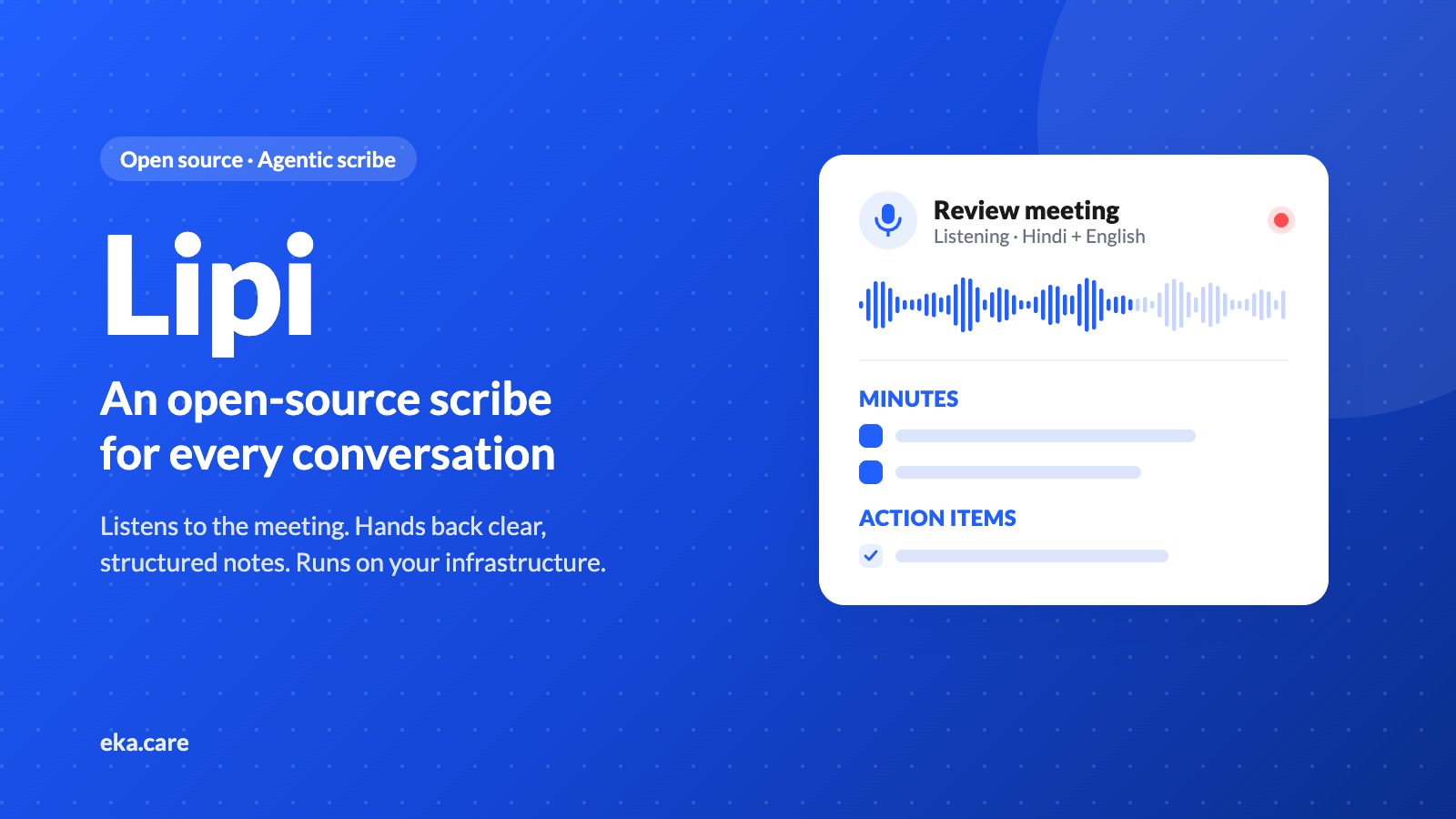
Today, we are proud to open-source Lipi, an agentic scribe that listens to a meeting and turns it into clear, structured notes. Lipi (earlier known as Vaarta) works for any meeting, in any domain, and any organisation or individual can run it on their own infrastructure.
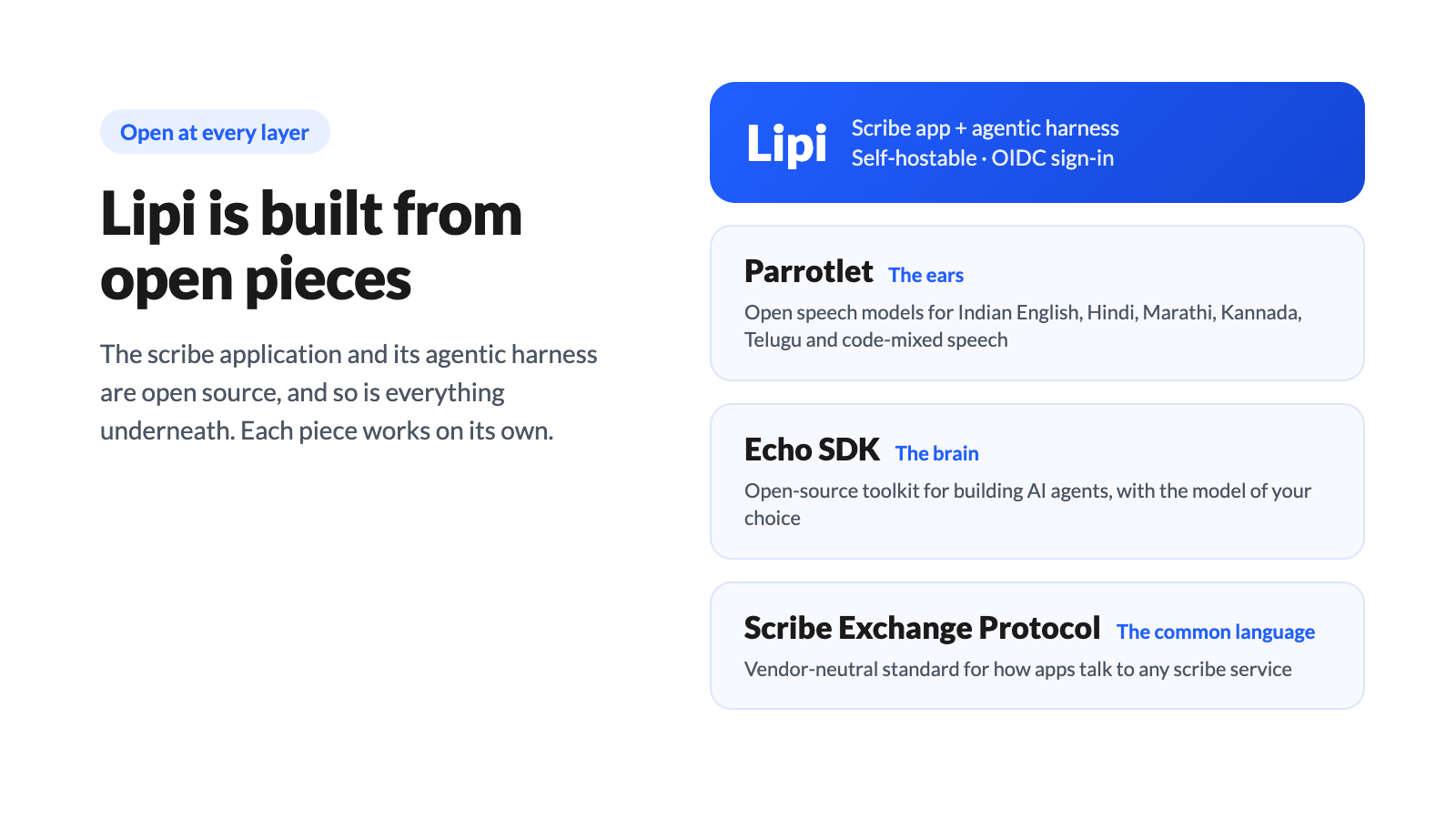
Lipi is built entirely on open building blocks: Eka Care's open Parrotlet speech model, the Echo agent SDK, and the newly published Scribe Exchange Protocol. Together, they give individuals, developers and institutions everything they need to bring an AI scribe into their own workflows.
At Eka Care, we built EkaScribe, an AI scribe that thousands of doctors across India use to turn consultations into clinical notes. Years of listening to doctors and patients, in many languages and accents, taught us one thing: the hard part of a good scribe is capturing what was said accurately, in real rooms, with real noise, and turning it into a useful note that people can act on.
We took that experience and built a scribe that is not tied to healthcare. Government meetings were the first use beyond the clinic. The same harness now extends to any domain, from review meetings and field visits to classrooms and boardrooms.
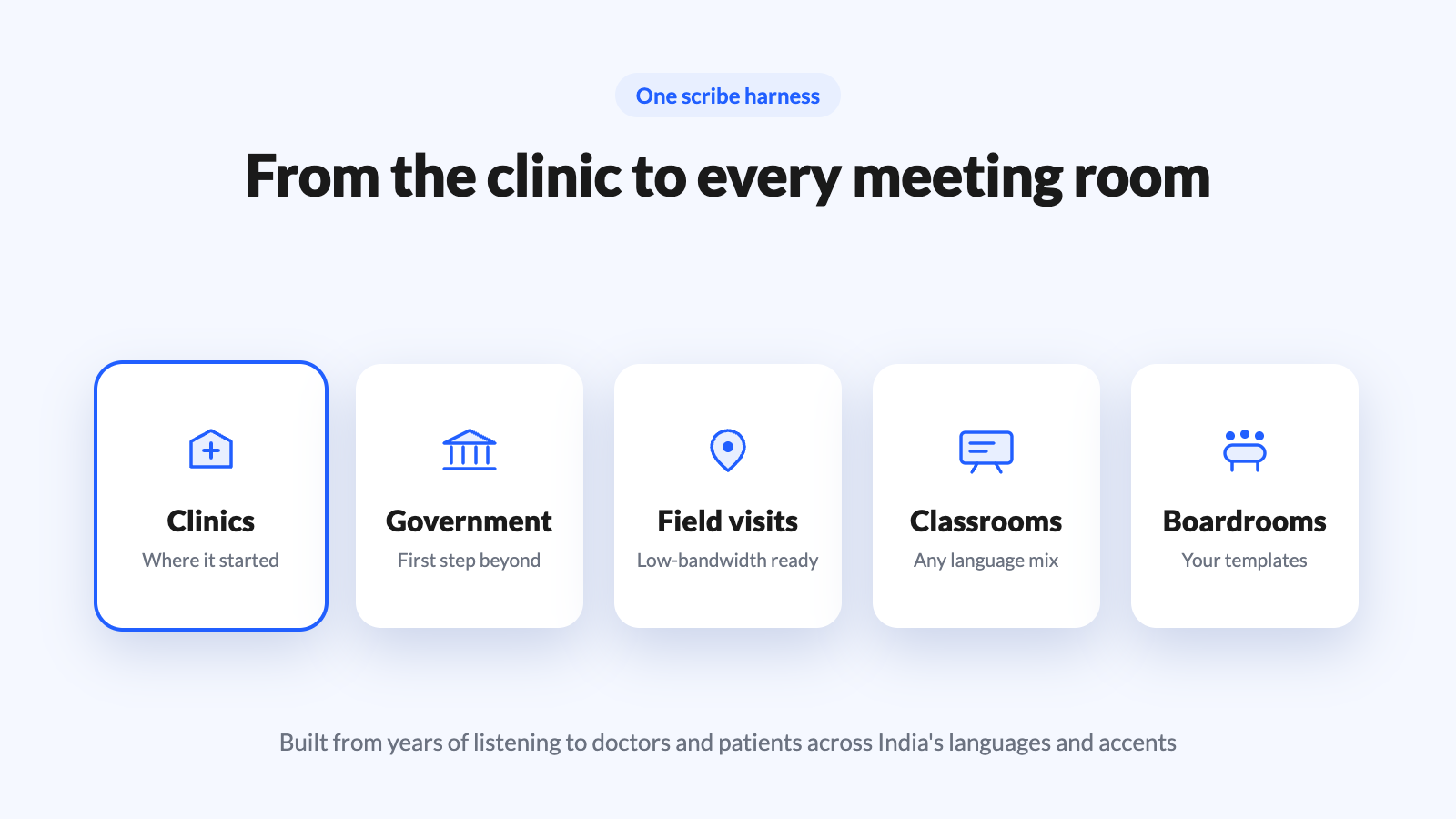
Lipi already powers multiple deployments for public health and meetings such as NHA VTT and Vaarta.
Lipi sits in the meeting, listens, and hands back notes in the format each team needs.
We believe public-good AI should be open all the way down. Lipi itself is open source: the scribe application and the agentic harness that runs it. Underneath, it is built from three open pieces, each usable on its own.
Lipi is free to use, adapt and deploy. We invite developers, governments, institutions and startups to run it, build templates for their own domains, and help shape the Scribe Exchange Protocol with us.
Every meeting holds decisions worth keeping. With Lipi, capturing them is now open to everyone.
And if you are a doctor, the scribe that started it all, EkaScribe, is at ekascribe.ai.