.jpg)
The future of healthcare industry in India will evolve much faster than before. As more hospitals, clinics and physicians migrate toward digital technology, Artificial Intelligence (AI) platforms and smart systems geared towards making healthcare delivery more efficient, timely and accurate; by 2026, technology will not merely become an asset for the healthcare industry, instead it will be a cornerstone of all medical operations.
Digital health is becoming one of the primary catalysts pushing this transformation in India's healthcare infrastructure. The introduction of AI driven voice-activated assistants, the latest in Electronic Medical Records (EMR) software and other high-tech advancements will bring India into the next level of smarter healthcare delivery. EkaCare, EkaScribe and other companies developing digital platforms will lead India's transformation into data-based, patient-centered hospitals.
The Potential Impact of Digital Health in 2026:
The potential impact of the future of healthcare industry in India rests on how rapidly hospitals will adopt digital technology. At present the number of patients seen by a single physician each day is extremely high, therefore the way a physician undertakes their job today involves significant time spent filling out forms by hand.
Many clinics continue to operate through paper-based patient record systems and are struggling with managing an adequate volume of patients. The introduction of digital platforms such as work flow systems provides significant advantages to both physicians and their patients by improving speed, accuracy, consistency and an overall positive patient experience.
Through digital technology, physicians will have improved capabilities to manage their patient cases, provide ongoing follow up regarding patients' conditions, document medical care and record results, all with fewer resources and in a much shorter period of time. Advanced digital technology is no longer a luxury, it has become a necessity.
Here are a few examples of how artificial intelligence is influencing healthcare:
Improving Access to Structured Data in EMR Systems
Having a medical professional take the time to type information into the EMR will no longer be necessary. Instead, medical professionals will be able to focus on treating and providing care to their patients.
Smart health assistants are a growing trend in the healthcare industry in India. AI-based health assistants will allow healthcare providers to have a control of their time and save on hours of unnecessary work each week.
For busy new MBBS doctors, the introduction of these digital assistants is essential for their efficiency, but also allows them to spend more time focusing on their patients.
EkaCare - Building a Digital Health Ecosystem in India
EkaCare is one of the largest digital health platforms in India by 2026. It brings together patients, doctors and hospitals into one secure platform.
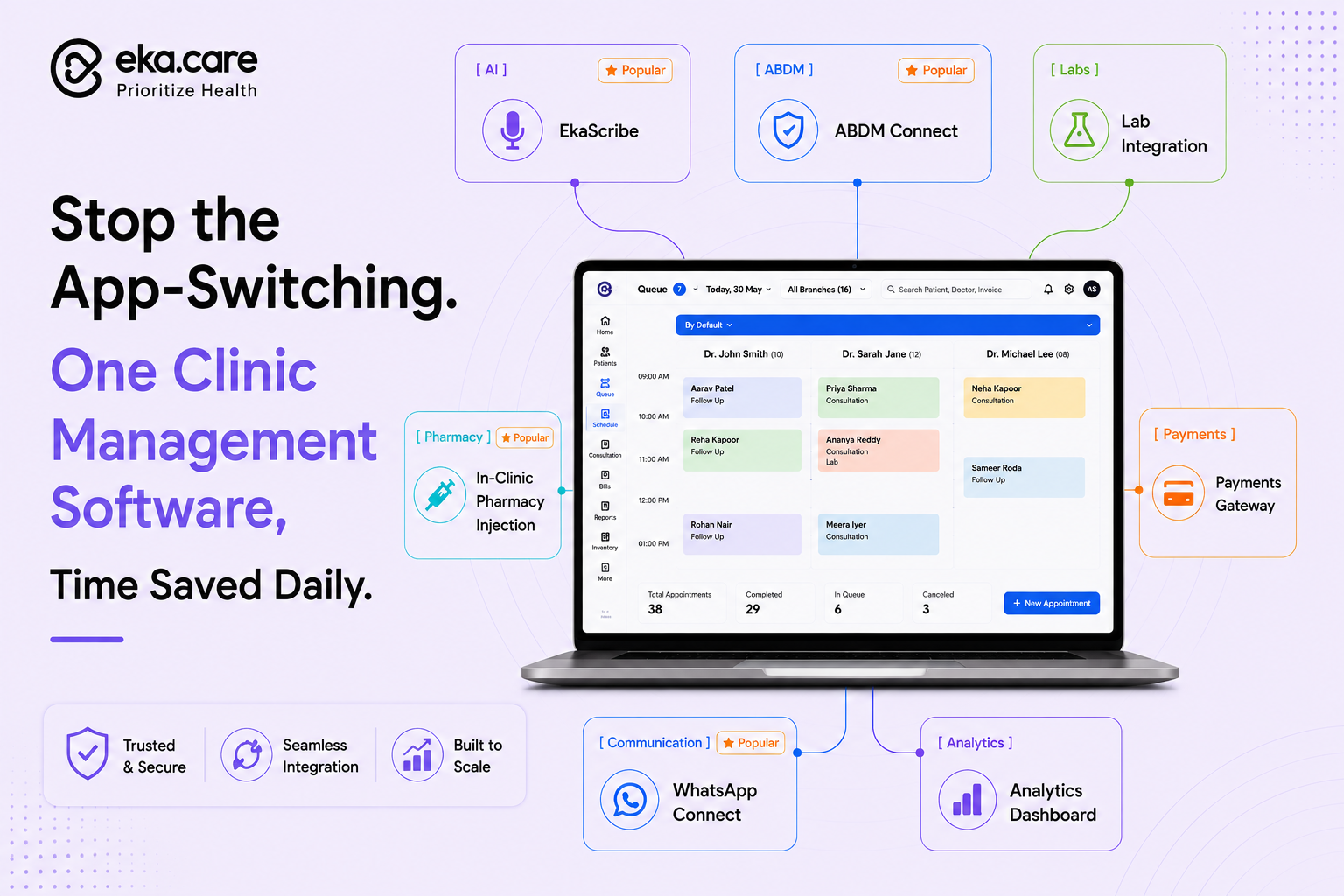
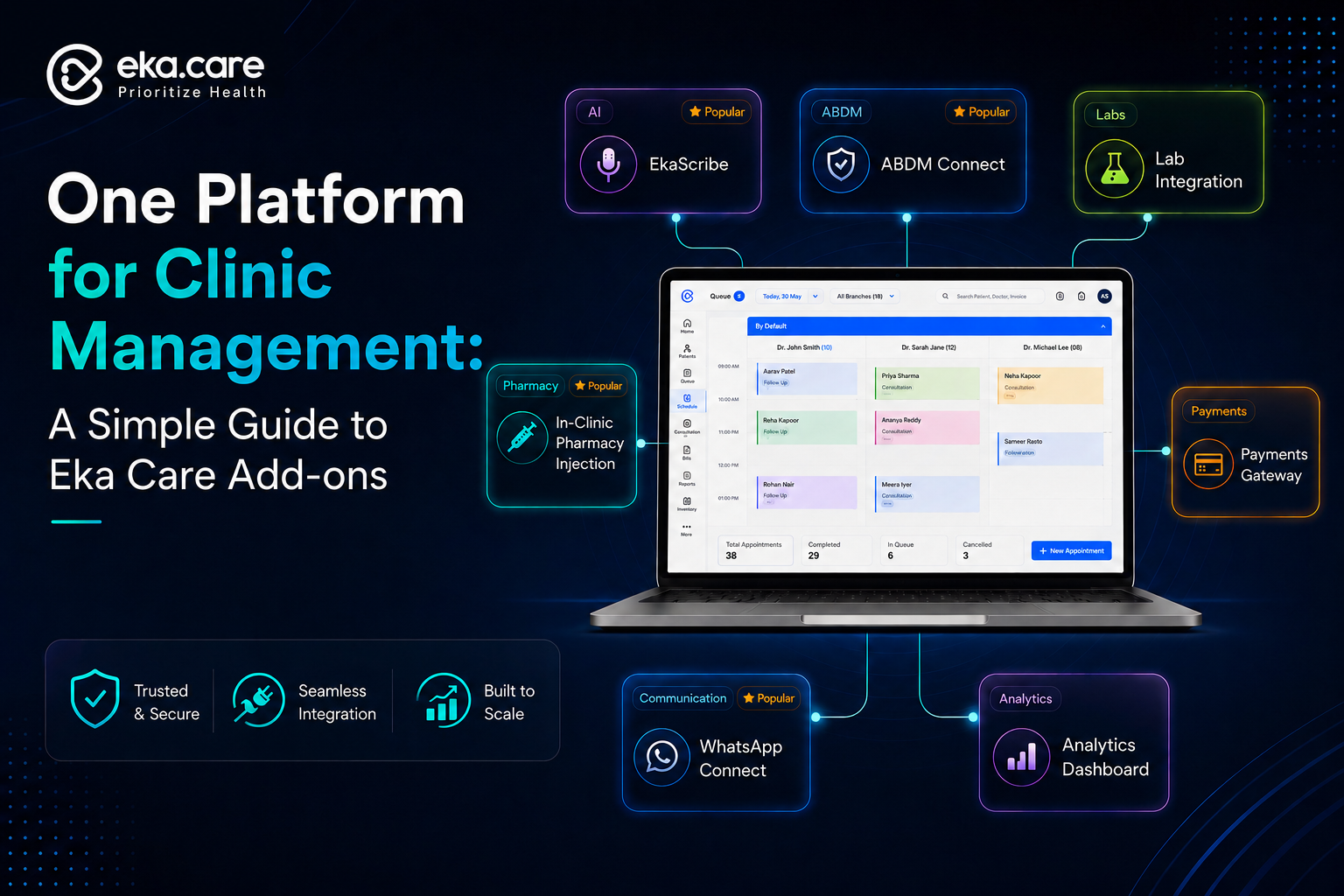
EkaCare’s functionality includes:
EkaScribe - AI Scribing
A common problem for physicians has always been documentation. Note taking, form filling and updating are time-consuming and painful. The immediate solution to this problem is the new AI scribe called EkaScribe.
EkaScribe:
In the future of healthcare in India, physicians will be able to dedicate upwards of 10 hours per week to providing better patient care with this new innovation.
Eka EMR is a digital backbone of clinics and hospitals that enables them to have an integrated electronic medical record (EMR) and a fully functioning Patient Management System (PMS). All information regarding patient’s medical records, doctor notes, prescriptions, patient vitals, and patient history can be stored electronically, allowing for fast retrieval of patient’s records.
Advantages of Using Eka EMR:
1. Quick access to patient records
2. Easy Doctor Documentation
3. Digital and Secure Digital Prescriptions
4. Streamlined Patient Management across Departments
5. In the Future, Electronic Medical Records (EMRs) Like Eka EMR Will Be the Foundation for All Hospitals in India.
The Future of Patient Management Will Be Smarter than Today
The future will be about making healthcare easier for patients. In the digital world of healthcare:
1. Patients Wait for Shorter Times
2. Doctors Have a Complete History of a Patient Instantly
3. Follow-ups Are Automated
4. Errors Occur Less Often
The most important reason for clinic efficiency in 2026 will be the development and improvement of robust patient management systems.
Conclusion: India's digital healthcare revolution is ripe to happen.
The next generation of the Indian healthcare industry will be bright, connected, and run by Artificial Intelligence (AI). Digital health platforms including EkaCare, intelligent tools like EkaScribe, and a robust Electronic Medical Record (EMR) system will allow for more intelligent workflow, better decisions made in patient care, and improved patient outcome.
As such, the use of digital health technology in India is no longer a choice. Digital health will be integral to every hospital and clinic in India by 2026 providing optimal operational efficiency and effectiveness.
.jpg)